There are weeks when everything suddenly feels harder. Your usual meals don’t feel as satisfying, cravings show up more often, and sticking to your routine takes more effort than it did just a few days ago. Even your energy may feel lower, and small things can feel more draining than usual.
If you’ve experienced this, you’re not doing anything wrong. This shift is often part of the luteal phase, which happens after ovulation. In Kai Cycle Sense, we call this the Burn Phase — not because your progress is going backward, but because your body is working differently during this time.
Understanding this phase can help you stop fighting your body and start adjusting in a way that feels more realistic.
What changes during the luteal phase
The luteal phase begins after ovulation and continues until your next period. During this time, progesterone rises while estrogen starts to fluctuate. Progesterone is often associated with a slower, more recovery-focused state, which can affect energy, mood, and appetite.
Because of this shift, many women notice that they feel more tired, more hungry, or less motivated compared to earlier in the cycle. This isn’t a lack of discipline — it’s a natural hormonal change.
Research shows that energy intake and resting metabolic rate can increase slightly during the luteal phase, which may explain why hunger and cravings feel stronger during this time (Barr et al., 1995, American Journal of Clinical Nutrition).
Why cravings feel stronger in this phase
One of the most noticeable changes in the luteal phase is an increase in cravings. Foods that didn’t feel tempting earlier in the cycle may suddenly feel more appealing, and staying in a strict routine can feel harder.
This happens because your body is using more energy and preparing for the next cycle. Hormonal changes can also affect how your brain responds to food, especially foods that are higher in sugar or carbs.
Instead of trying to ignore cravings completely, it often works better to adjust your approach. Small flexibility here can help you stay consistent without feeling restricted.
Eating during the Burn Phase
During the luteal phase, eating patterns may need to shift slightly to match how your body feels. This doesn’t mean overeating — it means being more flexible and responsive.
Some people benefit from:
Slightly higher calorie intake
More balanced meals with protein and carbs
Regular meal timing to avoid energy crashes
Studies suggest that calorie needs may increase slightly during the luteal phase due to changes in metabolism and hormonal activity (Dye & Blundell, 1997, Human Reproduction Update).
This is exactly why strict restriction during this phase often backfires. When your body needs more, ignoring it can make consistency harder.
Why this is called the Burn Phase
In Kai Cycle Sense, we call this the Burn Phase because your body is naturally using more energy during this time. It may feel like things are getting harder, but your body is actually working more in the background.
Instead of pushing harder, this phase is about adjusting smarter.
This is where many people quit or feel like they’re “falling off track,” but in reality, they’re just in a different phase of the cycle.
Understanding this shift can help you stay consistent without restarting your routine every time things feel harder.
How Kai Cycle Sense helps during the Burn Phase
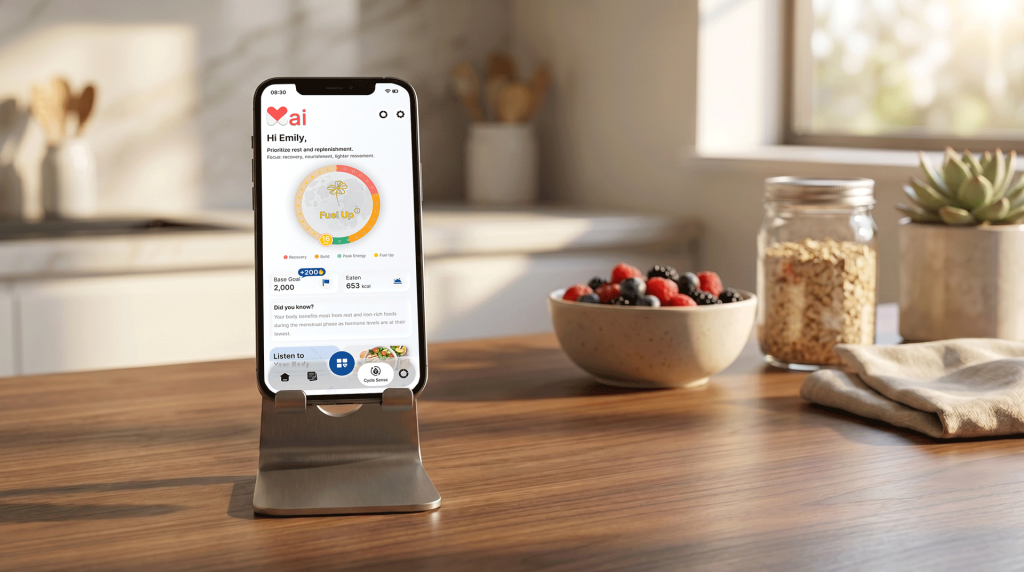
Kai Cycle Sense helps you recognize when you’re in the Burn Phase so you don’t have to guess why your hunger, mood, or energy feels different.
When the app shows this phase, it’s a reminder that your body may need slightly more flexibility. Instead of reacting emotionally, you can adjust your expectations and stay consistent in a more realistic way.
With Kai, you can:
Track how your energy and habits shift across cycles
See how your nutrition aligns with different phases
Understand when your body may need more support
Make small adjustments instead of starting over
Over time, this awareness helps you stay consistent even during the weeks that feel harder.
What the Burn Phase looks like in real life
In real life, the Burn Phase doesn’t mean everything is going wrong. It just means your body needs a slightly different approach.
You may feel more tired, more hungry, or less motivated, but that doesn’t mean progress has stopped. It means your body is shifting.
This is the time to focus on consistency, not perfection. Small adjustments, like slightly higher calories or more flexible tracking, can make a big difference.
Instead of pushing harder, you stay steady.
The bottom line
The luteal phase, or Burn Phase, is often when cravings increase, energy shifts, and staying consistent feels harder. This is not a setback — it’s a normal part of the cycle.
Your body isn’t working against you.
It’s working differently.
When you understand this, you stop forcing the same routine every week and start adjusting based on what your body needs.
With Kai Cycle Sense, you can recognize these changes early, stay flexible, and keep your progress steady without feeling like you have to start over.
Frequently Asked Questions
Why do I feel more hungry during the luteal phase?
During the luteal phase, progesterone levels rise and your body may use slightly more energy. This can increase hunger and cravings, which is a normal biological response.
Is it normal to have more cravings before my period?
Yes. Many women experience stronger cravings in the luteal phase due to hormonal changes that affect appetite and how the body responds to food.
Should I eat more during the luteal phase?
You don’t need to overeat, but slightly higher calorie intake or more balanced meals can help manage hunger and prevent feeling restricted.
Why does staying consistent feel harder in this phase?
Hormonal shifts can affect energy, mood, and appetite, which may make routines feel more difficult. This doesn’t mean you’re losing discipline — your body is just in a different phase.
How does Kai Cycle Sense help during the luteal phase?
Kai Cycle Sense shows when you are in the Burn Phase so you can adjust your habits, nutrition, and expectations instead of reacting to changes without context.