No two bodies are the same, so why follow a meal plan designed for someone else? Generic meal plans ignore your schedule, your preferences, your activity level, and your real life. They hand you a rigid template and expect you to make it work, even when it clearly does not.
Kaifit takes a completely different approach. Instead of forcing you into a one-size-fits-all plan, it uses AI to build a personalized meal plan based on your lifestyle, your goals, and how you actually eat.
The problem with generic meal plans
Most meal plans look perfect on paper: balanced macros, clean ingredients, proper portions. But in practice, they fall apart quickly because they ignore the details that actually matter.
They ignore your routine.
A plan that assumes you have time to cook three fresh meals a day will not survive a week of back-to-back meetings, commutes, and real-world responsibilities.
They ignore your preferences.
If half the foods on the list are things you dislike or never eat, you will not stick with it for long, no matter how healthy it is.
They ignore your activity level.
On heavy training days, you might be under-fueled. On rest days, you might be overeating. Generic plans treat every day the same, even though your body does not.
They never adapt.
When your goals shift, your schedule changes, or your activity increases, the plan stays frozen. You are left guessing how to adjust, or you abandon it entirely and start over.
Research supports this difference. The large-scale Food4Me Study, “Effect of Personalized Nutrition Advice on Dietary Behavior Change” (2017, International Journal of Epidemiology) found that individuals receiving personalized nutrition guidance made more sustained and meaningful dietary improvements compared to those given general dietary advice.
That is exactly the gap Kaifit is built to close.
How Kaifit builds your personalized meal plan
Kaifit does not guess. It uses the information you provide in the questionnaire to build a starting plan that reflects your actual life, not an ideal one.
Kaifit builds your starting plan from a few basics:
Who you are: your age, gender, height, and weight.
How you live: your typical activity level during the week.
What you want: your main goal (lose, gain, or maintain) and how fast you would like to progress.
How you eat: your dietary preference, like vegetarian, and any foods you avoid.
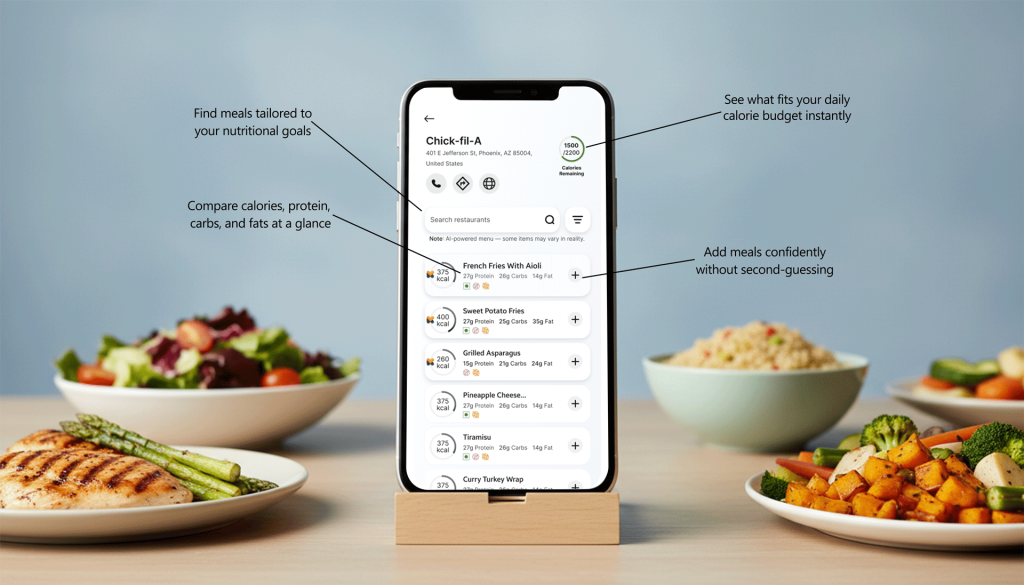
From there, Kaifit suggests daily calorie and macro targets, plus meal ideas that fit your preferences and goals. You can adjust the targets if you want, and the plan evolves as you log meals and give feedback.
Why personalized plans work better
Personalization is not about adding complexity. It is about removing the friction that makes most plans fail.
Plans evolve with your goals
Your needs change over time. When you move from weight loss to maintenance, increase your training volume, or shift your focus from fat loss to muscle gain, Kaifit recalculates your targets and updates your plan. You do not have to start from scratch or figure it out on your own.
Your favorite foods stay in the picture
Including familiar and enjoyable foods improves adherence because you do not feel like you are on a diet you cannot wait to quit. Kaifit keeps your preferences in the system, so your meal plan feels like an upgraded version of how you already like to eat, not a total overhaul.
Your activity level actually counts
On more active days, you may need more overall energy and carbs. On lighter or rest days, slightly less. By factoring in your activity level, Kaifit helps you align intake with output, which means steadier energy, fewer cravings, and better performance.
What it feels like to use a Kaifit meal plan
Instead of opening the fridge and guessing, you open Kaifit and see a plan that already matches your day.
A typical day might look like:
A protein-forward breakfast that fits your morning routine, like Greek yogurt with fruit and granola or eggs with toast.
A lunch you can assemble quickly from everyday ingredients, such as a chicken grain bowl or a turkey wrap with veggies.
A dinner built around foods you actually enjoy, tacos, pasta, or stir-fry, portioned to keep you close to your calorie and macro targets.
As you log meals and make simple swaps or mark favorites, your plan becomes easier to follow and more aligned with how you already like to eat over time.
The result: motivation without guesswork
When your meal plan reflects your goals, schedule, and tastes, staying consistent gets dramatically easier. You are not constantly asking, “What should I eat?” You are choosing between options that are already designed for you.
With Kaifit:
Plans evolve with your goals instead of staying frozen in week-one mode.
Your favorite foods are built in instead of banned outright.
Your activity level and dietary needs are part of the logic, not an afterthought.
The outcome is simple: more motivation, less guesswork, and real results you can actually stick with. AI does not replace your preferences; it uses them to create a smarter starting point so you can eat in a way that supports your body and your life, not someone else’s template.
Why this matters for all three goals
Whether you are trying to lose weight, gain weight, or maintain where you are, a personalized plan makes the process clearer and more sustainable.
For weight loss: You get a calorie deficit that fits your lifestyle, with meal suggestions that keep you satisfied instead of constantly hungry.
For weight gain: You get a calorie surplus structure that helps you eat enough consistently, without feeling stuffed or guessing if you are on track.
For maintenance: You get a stable target and flexible tracking that keeps your weight steady without obsessive restriction or constant vigilance.
Kaifit works for your goal, whatever it is.
The Bottom Line
Generic meal plans fail because they ignore the details that make or break consistency: your schedule, your preferences, your activity, and your goals. Kaifit fixes that by building a plan around you, then adapting it as your life and priorities change.
Eating smarter should not mean eating harder. With Kaifit, it finally does not.
How does Kaifit know what foods I like?
Kaifit asks about your dietary preferences and restrictions in the questionnaire. As you log meals and mark favorites, the app learns which foods you enjoy and can suggest similar options over time.
Can I adjust the meal plan if I don't like a suggestion?
Yes. You can swap meals, adjust portions, or manually edit anything in the plan. Kaifit gives you structure, but you stay in full control of what you actually eat.
What if my activity level changes week to week?
Kaifit factors in your typical activity level from the questionnaire. If your routine changes significantly, like starting a new training program or shifting to a more active job, you can update your profile and the app will recalculate your targets.
Does Kaifit work for vegetarians or other dietary preferences?
Yes. Kaifit asks about your dietary preference during setup and tailors meal suggestions accordingly. Whether you are vegetarian, vegan, or follow other eating styles, the plan adapts to fit.
How often does the meal plan update?
Your plan updates when you change your goal, adjust your calorie target, or update your profile information. The meal suggestions also evolve as you log meals and give feedback on what works for you.