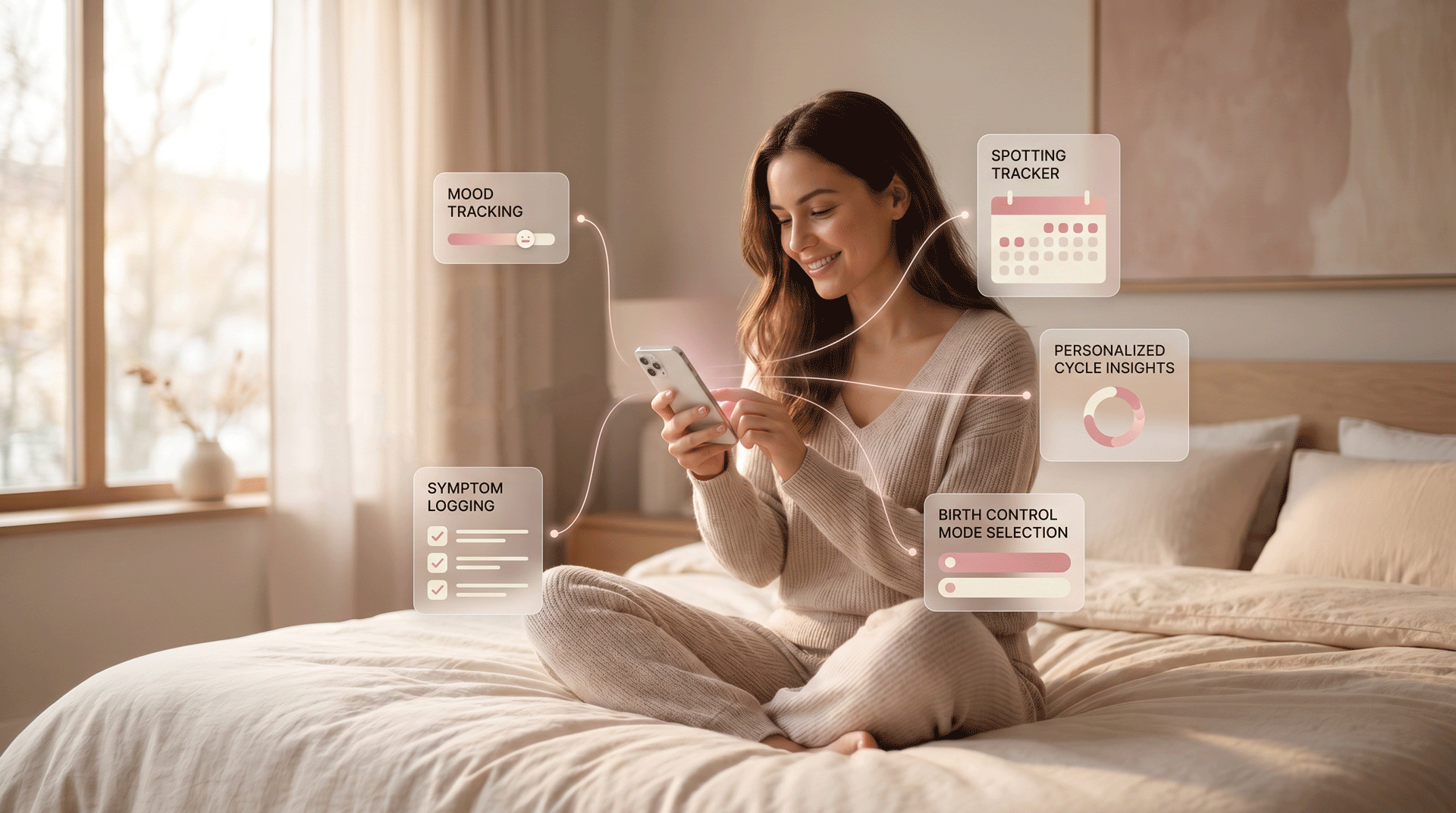
Many people assume cycle tracking stops being useful once they start birth control.
But while birth control can change how the cycle behaves, it does not automatically remove patterns, symptoms, or physical changes.
Energy, appetite, mood, bleeding patterns, spotting, and routine changes can still happen throughout the month. The difference is that those patterns may look different depending on the type of birth control being used.
That is why tracking still matters.
Kai helps users track and understand their experience with both hormonal and non-hormonal birth control through a more personalized cycle-tracking approach.
Why birth control affects tracking differently
Not all birth control works the same way.
Hormonal birth control can influence ovulation, bleeding patterns, symptoms, and cycle timing differently depending on the method being used. Non-hormonal birth control may still allow more natural cycle patterns while changing other aspects of the experience.
Because of this, traditional cycle tracking methods do not always feel accurate or relevant for everyone.
Some users may experience predictable bleeding windows, while others notice spotting, shorter cycles, longer cycles, or changing symptoms over time.
Tracking needs to adapt to those differences.
Why a one-size-fits-all cycle experience doesn’t work
Many tracking experiences are designed around a standard menstrual cycle.
But birth control changes how some users experience their cycle, which means routines, symptoms, and overall patterns may need a different structure.
For some people, cycle phases feel simplified. Others may focus more on symptom awareness and consistency instead of detailed phase-based changes.
That is why flexibility matters.
How Kai adapts cycle tracking for birth control
Birth control can change how cycles feel and behave, which is why many traditional tracking apps stop feeling accurate or relatable after a while.
Some users notice more predictable patterns, while others experience spotting, changing symptoms, or cycles that feel less structured than before. For many people, the experience no longer fits neatly into a standard cycle model.
Kai adjusts to that experience instead of forcing every user into the same tracking system.
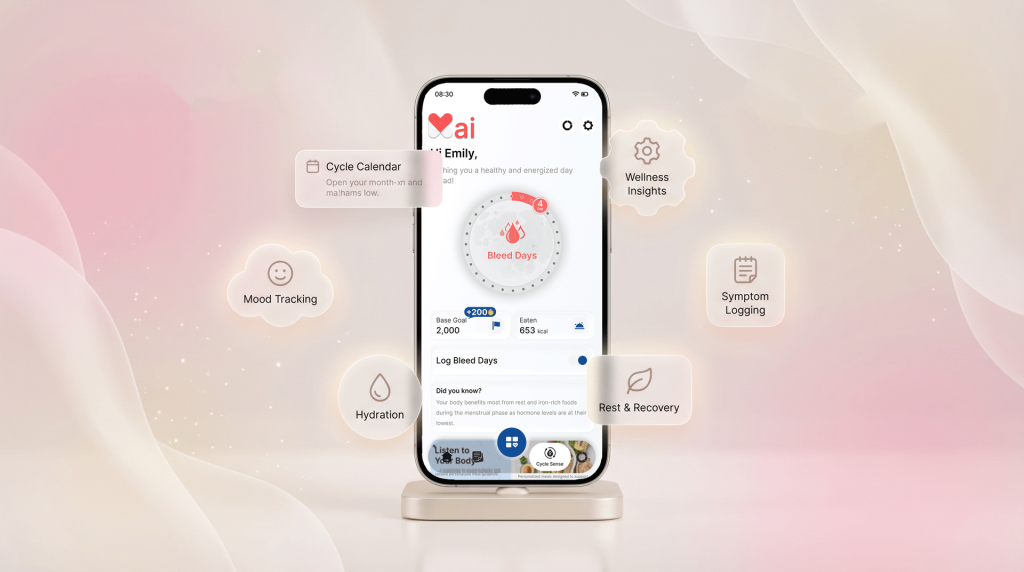
Whether someone is using hormonal or non-hormonal birth control, the app adapts how tracking, insights, and symptom logging are shown throughout the experience. Meal planning, cycle visibility, and analysis become more aligned with how the user’s routine actually feels over time.
Instead of treating birth control like a small setting, Kai builds the experience around it so tracking feels more personal, flexible, and realistic.
Why symptom awareness still matters
Even with birth control, users may still notice patterns related to mood, energy, appetite, skin changes, bleeding, or discomfort.
Without tracking, these changes can feel random.
Over time, logging symptoms and cycle patterns helps users better understand how their body responds across weeks and months.
That awareness can make routines feel more manageable and less confusing.
A more personalized experience instead of generic tracking
Birth control experiences are not identical.
Some users are adjusting to a new method. Others have used the same option for years. Some may experience more predictable cycles, while others notice irregular patterns or spotting.
Kai adapts based on those differences instead of treating every user the same.
That creates a tracking experience that feels more supportive and more relevant to real life.
What this looks like in real life
Instead of trying to force your experience into a standard cycle tracker, Kai adjusts based on your selected birth control mode.
Users can track symptoms, view cycle visibility, log patterns, and better understand how their body changes over time without feeling like the app is built for someone else.
The experience feels more flexible, personalized, and easier to follow.
The bottom line
Starting birth control does not mean cycle tracking becomes unnecessary.
Patterns, symptoms, and changes can still happen throughout the month, even if the experience looks different from a traditional cycle.
Kai helps users track hormonal and non-hormonal birth control experiences with more personalized workflows, symptom awareness, and flexible cycle insights.
Because better awareness starts with tracking that actually adapts to you.
Can I still track my cycle while using birth control?
Yes. Birth control may change your cycle patterns, but tracking symptoms, bleeding, and routines can still be useful.
Does Kai support hormonal and non-hormonal birth control?
Yes. Kai includes dedicated experiences for both hormonal and non-hormonal birth control tracking.
What symptoms can I track in Kai?
Users can track symptoms including bleeding patterns, spotting, mood changes, and other cycle-related experiences.
Why does cycle tracking feel different on birth control?
Birth control can change cycle timing, symptoms, and bleeding patterns, which is why standard tracking models may not always feel accurate.
Can Kai adapt based on my birth control experience?
Yes. Kai adjusts tracking, symptom visibility, and insights based on the selected birth control mode.