Most people know they “should” eat better but get stuck on the details: How much protein is enough? Are these portions reasonable? Is this day actually balanced or just “vibes”? Kai is built to answer those questions in plain language, without expecting you to become a human calculator.
By combining smart meal logging with clear macro and calorie feedback, Kai helps you understand what is on your plate in seconds, not spreadsheets.
Why food tracking works better than guessing
Guessing your intake is like guessing your bank balance—you might be close, but you will not know for sure until you see the numbers. Tracking food intake has been shown to improve awareness, support weight management, and help people make more intentional choices.
Here is what consistent tracking can do:
- Boost awareness of what and how much you are actually eating, instead of what you think you are eating.
- Reveal patterns you would otherwise miss, like low protein, high sugar drinks, or oversized portions at dinner.
- Support your main goal, whether you want to lose, gain, or maintain weight, while helping you experience steadier energy and fewer crashes through the day.
The problem is that traditional tracking can feel slow and overly technical. Kai fixes that by doing the heavy lifting for you.
How Kai handles the numbers so you do not have to
You do not need to know the exact macros of your burrito bowl off the top of your head—that is Kai’s job. Modern nutrition apps can estimate calories and macros based on ingredients, portion sizes, and database entries, giving you quick insight into your meals.
Kai’s approach is designed to be simple:
- You log your meals using history, favourites, or AI-assisted entries instead of building everything manually.
- Kai calculates calories, protein, carbs, and fats and shows you how each meal contributes to your daily goals.
- You get a clear, at-a-glance view of how “balanced” your day looks, without advanced nutrition knowledge.
This turns food tracking into feedback instead of homework. You eat, you log, Kai explains what that day looks like nutritionally.
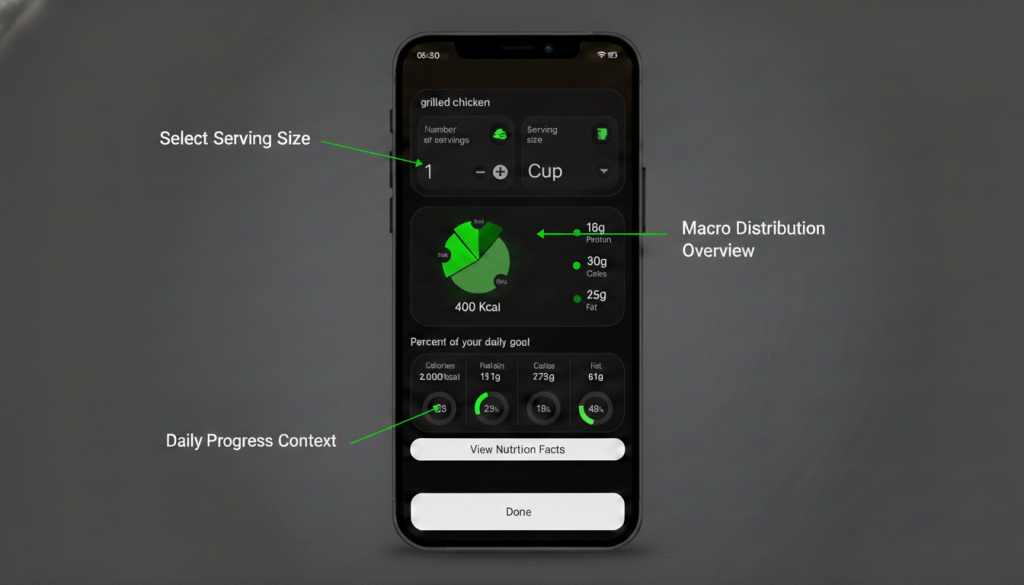
Everyday examples: what Kai helps you notice
When you see your day laid out with macros and calories, certain patterns become obvious very quickly.
For example:
- You might notice breakfast is almost all carbs (toast, juice, pastry) with very little protein, leaving you hungrier mid-morning.
- You may realize dinner portions are regularly double what you thought, especially for refined carbs like pasta or white rice.
- Snacks and drinks—latte add-ons, sweetened beverages, office treats—might be contributing a surprising chunk of your total calories.
Once you see these patterns, adjusting becomes much easier: add Greek yogurt or eggs at breakfast, swap part of your pasta for veggies, or trade one sugary drink for water or unsweetened tea.
Kai does not just track; it teaches you what a more balanced day actually looks like for your body and goals.
Healthy eating, broken down into small wins
Many people try to change everything at once and burn out. Health organizations and dietitians consistently recommend small, realistic steps instead of drastic overhauls. Kai is perfectly aligned with that philosophy.
Using Kai, you can focus on one or two simple adjustments at a time:
- Aim to hit a minimum protein target most days to support muscle, satiety, and stable energy.
- Gradually trim back on the highest-calorie, lowest-satiety items you see popping up often, like sugary drinks or oversized desserts.
- Nudge your plate toward a healthier balance: more vegetables, reasonable portions of carbs, and some lean protein at each main meal.
By tracking and nudging, you build habits that feel doable on busy days—not just on “perfect” ones.
Why Kai is a smarter health partner, not a food cop
Food tracking apps can sometimes feel judgmental; they flash red numbers and make you feel like you “failed” your day. Effective digital health tools, though, are more about awareness and guidance than punishment.
Kai stands out because it:
- Focuses on showing you information in a clear, supportive way rather than shaming you for going over a target.
- Helps you look at patterns over weeks, not just single days, which is how real change happens.
- Pairs tracking with insight, so you understand not just how much you are eating, but how you can tweak it to feel and perform better.
In other words, Kai acts like a smart, always-on nutrition sidekick—handling the math, surfacing patterns, and leaving the actual food choices in your control.
Frequently Asked Questions
Do I really need to count macros to be healthy?
Not necessarily. Many people improve their health just by tracking food and making gradual adjustments. Macros are simply a more detailed way to see if you are getting enough protein, moderate carbs, and healthy fats.
What if I do not know my ideal calorie or macro targets?
General calorie and macro ranges can be estimated from your age, size, and activity level, and many apps use those formulas to suggest starting points. The key is to treat these numbers as guides, not rigid rules.
Is food tracking only for weight loss?
No. Food tracking is also helpful for improving energy, managing blood sugar, supporting workouts, or identifying trigger foods for digestion issues. Weight loss is just one possible goal among many.
How accurate does my logging need to be ?
It does not have to be perfect to be useful. Studies show that even approximate, consistent logging improves awareness and supports better decision-making.
Won’t tracking make me obsessed with food?
For most people, tracking briefly shines a light on habits, then becomes a flexible tool they use when they want more structure or feedback. If you ever feel more stressed than supported, it is reasonable to scale back or talk with a health professional.