Macros are everywhere in fitness conversations, but many people still are not sure what they really are or how to use them. You might have heard phrases like “hit your macros,” “high‑protein day,” or “track your carbs,” without anyone explaining what that actually means in practice.
If you want better energy, better body composition, and more predictable results from your training, understanding macronutrients is one of the simplest and most powerful steps you can take.
What are macros, really?
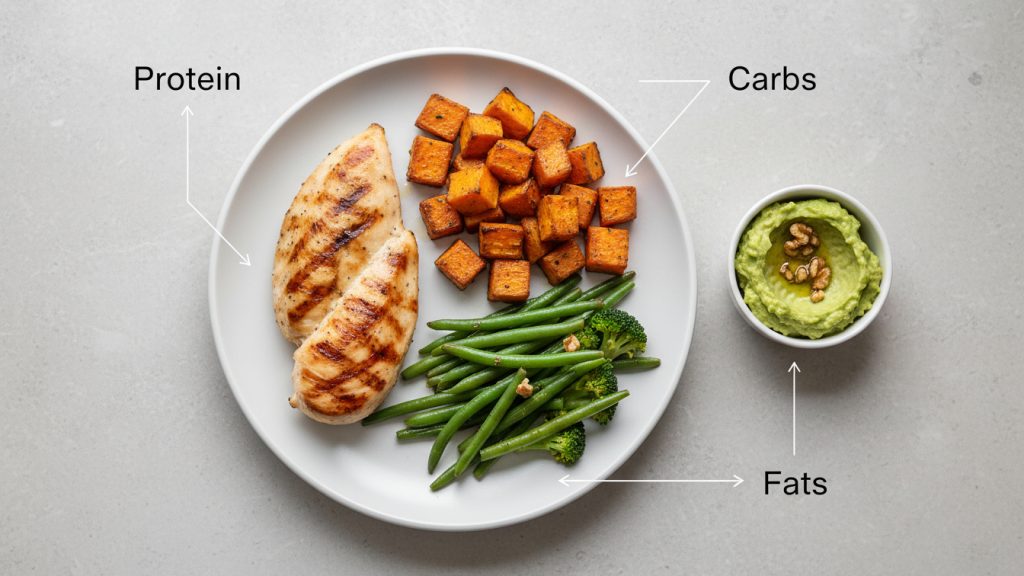
“Macros” is short for macronutrients. These are the main nutrients your body needs in relatively large amounts every day: protein, carbohydrates, and fats.
All three provide energy in the form of calories, but they play very different roles in your body:
- Protein: 4 calories per gram
- Carbohydrates: 4 calories per gram
- Fats: 9 calories per gram
Calories tell you how much energy you are eating. Macros tell you what that energy is made of and how it will likely affect performance, hunger, and body composition.
The Big Three
Protein: Your recovery and structure macro
Protein is made up of amino acids, which your body uses to build and repair tissues, including muscle, skin, hair, enzymes, and even parts of your immune system.
Why protein matters:
- Supports muscle repair and growth after training
- Helps preserve lean mass during fat loss
- Increases satiety, so you stay fuller for longer
- Slightly boosts calorie burn through the energy cost of digestion
Common protein sources include lean meats, fish, eggs, dairy, tofu, tempeh, lentils, beans, and high‑protein yogurts.
Many active people feel and perform better when they aim for a higher protein intake than the bare minimum, especially when lifting weights or trying to lose fat without losing muscle.
Carbohydrates: Your primary fuel
Carbohydrates are your body’s preferred energy source for most daily activities and higher‑intensity training. They are broken down into glucose, which fuels your brain, nervous system, and working muscles.
Why carbs matter:
- Provide quick energy for workouts, sports, and busy days
- Replenish muscle glycogen, helping you recover between sessions
- Support mental focus and mood when matched well to your activity level
Carbs come from foods like fruit, grains, rice, pasta, bread, oats, potatoes, beans, and many vegetables. Fiber‑rich carbohydrate sources (such as oats, beans, and whole grains) also help digestion and long‑lasting fullness.
Carbs are not “good” or “bad” on their own. The key is matching your carbohydrate intake to your output and goals rather than cutting them blindly.
Fats: Hormones, brain, and long‑lasting energy
Dietary fats are more calorie‑dense but are essential for health and performance.
Why fats matter:
- Support hormone production, including sex hormones and stress hormones
- Help absorb fat‑soluble vitamins (A, D, E, and K)
- Provide a slow‑burning energy source
- Support brain function and cell structure
Healthy fat sources include olive oil, nuts, seeds, avocado, fatty fish, and dairy. Ultra‑processed fats and repeatedly heated oils are less ideal when they dominate the diet, but fats as a whole are not the enemy.
Macros vs calories: what is the difference?
Calories answer one question: “How much energy am I eating?”
Macros answer a more useful set of questions:
- “Am I eating enough protein to support my goals?”
- “Are my carbs matched to my training and lifestyle?”
- “Is my fat intake high enough for hormones and satiety, but not so high that it crowds out everything else?”
Two different meals can have the exact same calories but completely different macro profiles and effects:
- 600 calories of fast food dessert: high sugar and fat, almost no protein
- 600 calories of chicken, rice, and vegetables: high protein, balanced carbs, moderate fats
On paper, the calories are identical. In your body, one meal likely supports training, recovery, and hunger control far better than the other.
How macros change with your goals
You do not need the exact same macro balance for every goal. The same person might eat different macro ratios during:
- Fat loss (cutting): Slight calorie deficit, higher protein to protect muscle, carbs and fats arranged around training and preferences.
- Muscle gain (bulking): Slight calorie surplus, high protein, enough carbs to fuel progressive training, moderate fats.
- Maintenance: Calories near maintenance, macros tuned for performance, satiety, and general health.
There is no one perfect macro split for everyone, but common patterns emerge:
- Higher protein usually helps in almost all phases.
- Carbs tend to rise with activity level and training intensity.
- Fats fill in the remaining calories to support hormones and make meals satisfying.
Why tracking macros can be so powerful
ou do not have to track macros forever, but doing it for a period can teach you more about your eating patterns than almost anything else.
Benefits many people notice:
- Clearer link between food and performance: you see how changing protein, carbs, or fats affects your workouts and energy.
- Better portion awareness: you realize where hidden calories and low‑protein meals are sneaking in.
- More flexibility: you can fit in foods you enjoy as long as your daily macro picture still aligns with your goals.
Instead of labeling foods as “good” or “bad,” macros give you a more neutral way to think about tradeoffs and choices
How Kaifit makes macro tracking easier
Counting macros manually used to mean spreadsheets, labels, and a lot of guesswork. Kaifit reduces that friction by doing the heavy lifting for you.
With Kaifit, you can:
- See your macro balance in real time for each day and each meal.
- Get gentle alerts when you are significantly over or under your protein, carb, or fat targets.
- Adjust your meals on the fly to stay aligned with your goals, whether that means adding a protein source, swapping a side, or balancing a heavier meal later in the day.
Instead of obsessing over perfection, Kaifit helps you build awareness and consistency. Over time, you start to know intuitively what a “high‑protein plate” looks like for you, or how much carbohydrate you need on a harder training day.
Putting it all together
Whether you are bulking, cutting, or maintaining, macro awareness gives you more control and fewer surprises. Calories tell part of the story, but macros explain why you feel the way you do, why your training feels easy or heavy, and why your body is responding in a certain way.
You do not need to chase a perfect number every day. Instead, think of macros as a clear set of guardrails that keep your nutrition moving in the right direction. And with Kaifit tracking the details in the background, you are free to focus on living your life, training hard, and letting the data guide smarter choices—not dictate them