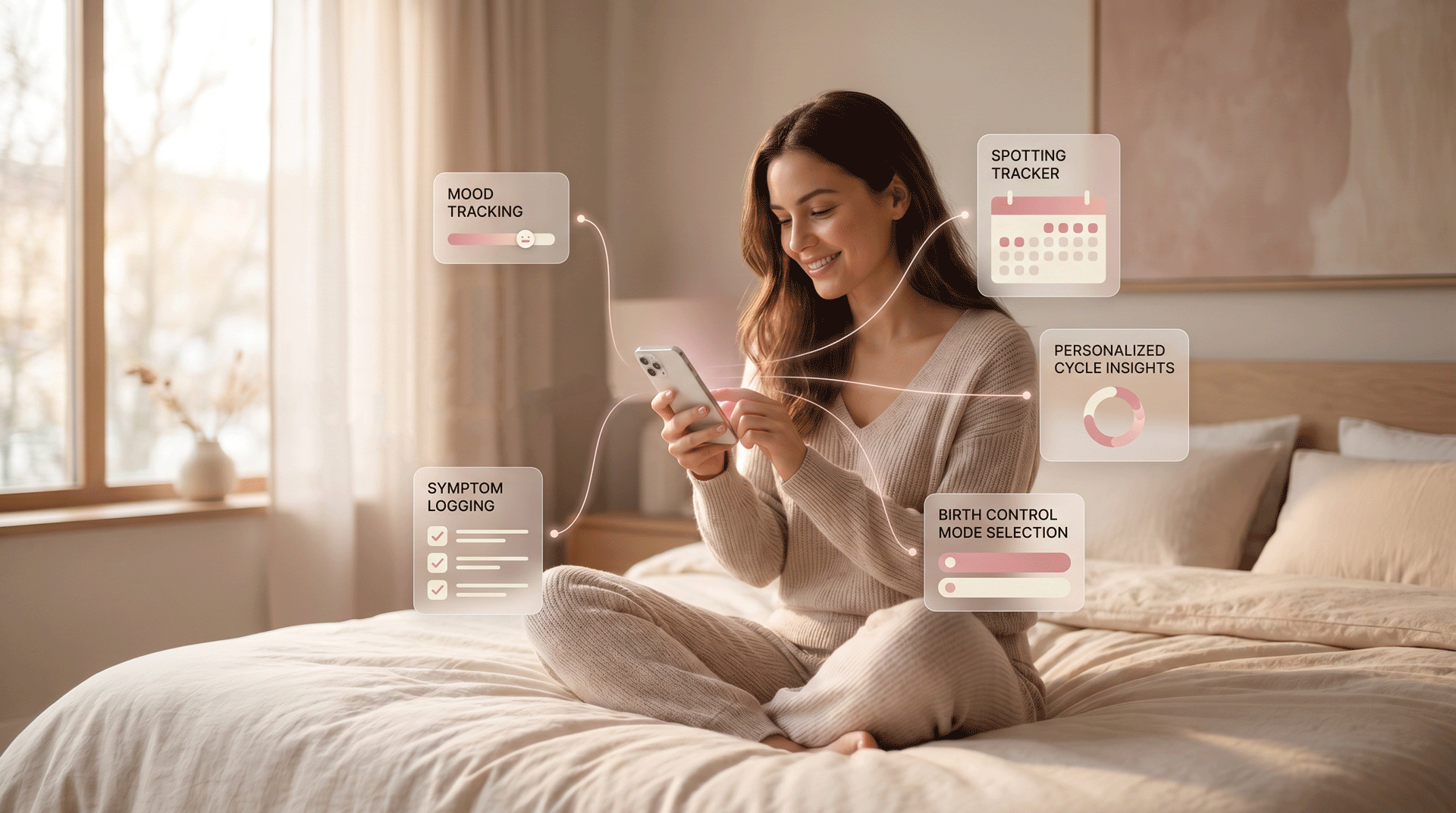
Some days you feel more confident, more social, and more ready to take on challenges. Your workouts may feel stronger, your focus may feel clearer, and even sticking to your routine can feel easier than usual.
You may notice that this tends to happen in the middle of your cycle, when your energy feels higher and your mood feels lighter.
This part of the cycle is called the ovulation phase, and in Kai Cycle Sense we call it the Peak Phase. It’s often a time when your body may feel more supportive of performance — both physically and mentally. Understanding this phase can help you use that natural shift instead of wondering why some weeks feel easier than others.
What happens during the ovulation phase
Ovulation happens around the middle of the cycle, after the follicular phase and before the luteal phase. During this time, estrogen reaches one of its higher points, and a hormone called luteinizing hormone triggers the release of an egg.
You don’t need to remember the science to notice the effects — many women report feeling more energetic, more confident, and more alert during this part of the month.
Estrogen is often associated with higher energy, improved mood, and better recovery, while progesterone is still relatively low at this point. Because of that combination, the body may feel stronger or more responsive compared to later in the cycle.
Research on the menstrual cycle and performance suggests that some women experience improvements in strength, coordination, and perceived performance around ovulation, when estrogen levels are high (McNulty et al., 2020, Sports Medicine). This doesn’t mean everyone experiences this — but it helps explain why this phase can feel like a natural high point for many women.
Why this is called the Peak Phase
In Kai Cycle Sense, ovulation is called the Peak Phase because this is often when your body may feel more in sync. Energy can feel higher, mood may feel more positive, and motivation can come with less resistance.
Many women also feel more social and more confident during this time, which can make it easier to stay consistent with routines.
This can be a supportive phase to focus on performance, productivity, and activities that require more effort or focus — not because you have to push harder, but because things may feel more aligned.
Thinking this way also helps later in the cycle, because you stop expecting the same energy every week.
Eating during the Peak Phase
During ovulation, appetite often feels fairly stable for many people. Meals may feel easier to manage, cravings may be less intense, and it can feel more natural to stay close to your usual eating routine.
Hormonal changes across the cycle can influence hunger, metabolism, and food intake. Some studies show that appetite tends to increase later in the cycle when progesterone rises (Buffenstein et al., 1995, American Journal of Clinical Nutrition). Since progesterone is still relatively low during ovulation, eating patterns may feel more steady for many women.
This can be a good time to focus on regular meals, enough protein, and proper hydration so your body has the fuel it needs.
Training and performance in this phase
The Peak Phase is often when workouts may feel stronger for many women. Some notice improvements in endurance or strength, while others simply feel more comfortable and consistent in their training.
Because estrogen is higher and recovery may feel more efficient, some people find this phase supportive for slightly more challenging workouts.
This doesn’t mean every workout has to be intense. It can simply be a good time for:
- Trying new exercises
- Focusing on form and coordination
- Staying consistent with your routine
Some research suggests that neuromuscular performance and coordination may improve around ovulation (McNulty et al., 2020, Sports Medicine), which can make certain workouts feel smoother — though individual responses vary.
The goal isn’t to push all the time — it’s to notice when your body feels ready and respond accordingly.
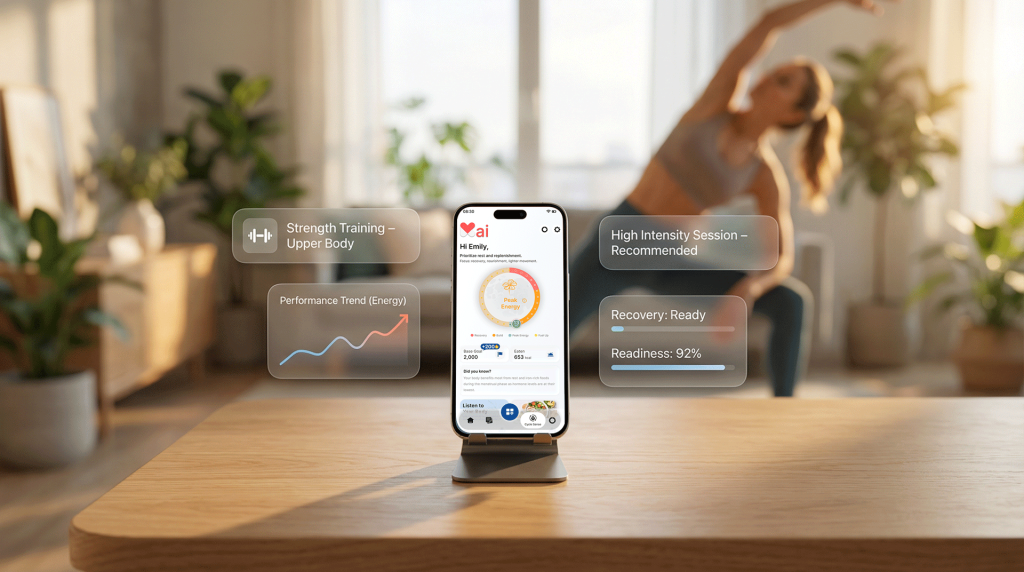
How Kai Cycle Sense helps during the Peak Phase
Kai Cycle Sense doesn’t just show where you are in your cycle — it helps you understand patterns over time.
With Kai, you can:
Track how your energy, mood, and habits change across multiple cycles
See how your nutrition and logged meals align with different phases
Identify which days tend to feel more effortless versus more demanding
Get insights that adapt to your personal patterns, not generic assumptions
So instead of just knowing you’re in the Peak Phase, you start understanding what that actually means for your body.
Over time, this helps you stop relying on guesswork and start making decisions based on real patterns.
What the Peak Phase looks like in real life
n real life, the Peak Phase may simply feel like a period where things flow a little more easily. You may feel more confident in workouts, more focused on your goals, and more willing to stay consistent.
Tasks that felt heavier earlier in the cycle may feel lighter now.
Using this phase well doesn’t mean doing everything perfectly. It just means recognizing when your body feels supportive, so you don’t have to force progress later when energy naturally shifts.
This approach can make the entire month feel more balanced.
The bottom line
The ovulation phase, or Peak Phase, is often a time when energy, confidence, and performance may feel higher for many women as estrogen reaches one of its higher points in the cycle.
This can make it easier to stay consistent, train effectively, and feel more in control of your routine — but the experience is always individual.
Real progress doesn’t come from feeling the same every week.
It comes from understanding that your body changes — and learning how to work with those changes over time.
With Kai Cycle Sense, you can see those patterns clearly, plan more realistically, and stay consistent without forcing the same approach every day.
Frequently Asked Questions
Why do I feel more confident and energetic during ovulation?
During ovulation, estrogen levels are relatively higher, which is often associated with improved mood, energy, and focus. Many women notice this shift, though not everyone experiences it the same way.
Is ovulation really the best time for workouts?
For many women, workouts may feel more supportive during this phase, but it’s not a rule. Individual responses vary, so it’s best to observe your own patterns.
Why does my appetite feel different at different times of the cycle?
Hormonal changes across the menstrual cycle can affect hunger, cravings, and metabolism. Appetite may feel more stable around ovulation and increase later in the cycle for some women.
How does cycle tracking help with fitness and nutrition?
Cycle tracking helps you understand patterns in energy, mood, appetite, and performance, so you can make more informed decisions instead of relying on guesswork.
How does Kai Cycle Sense help during the ovulation phase?
Kai Cycle Sense helps you identify the Peak Phase and understand how your energy, workouts, and nutrition patterns behave during this time across multiple cycles.