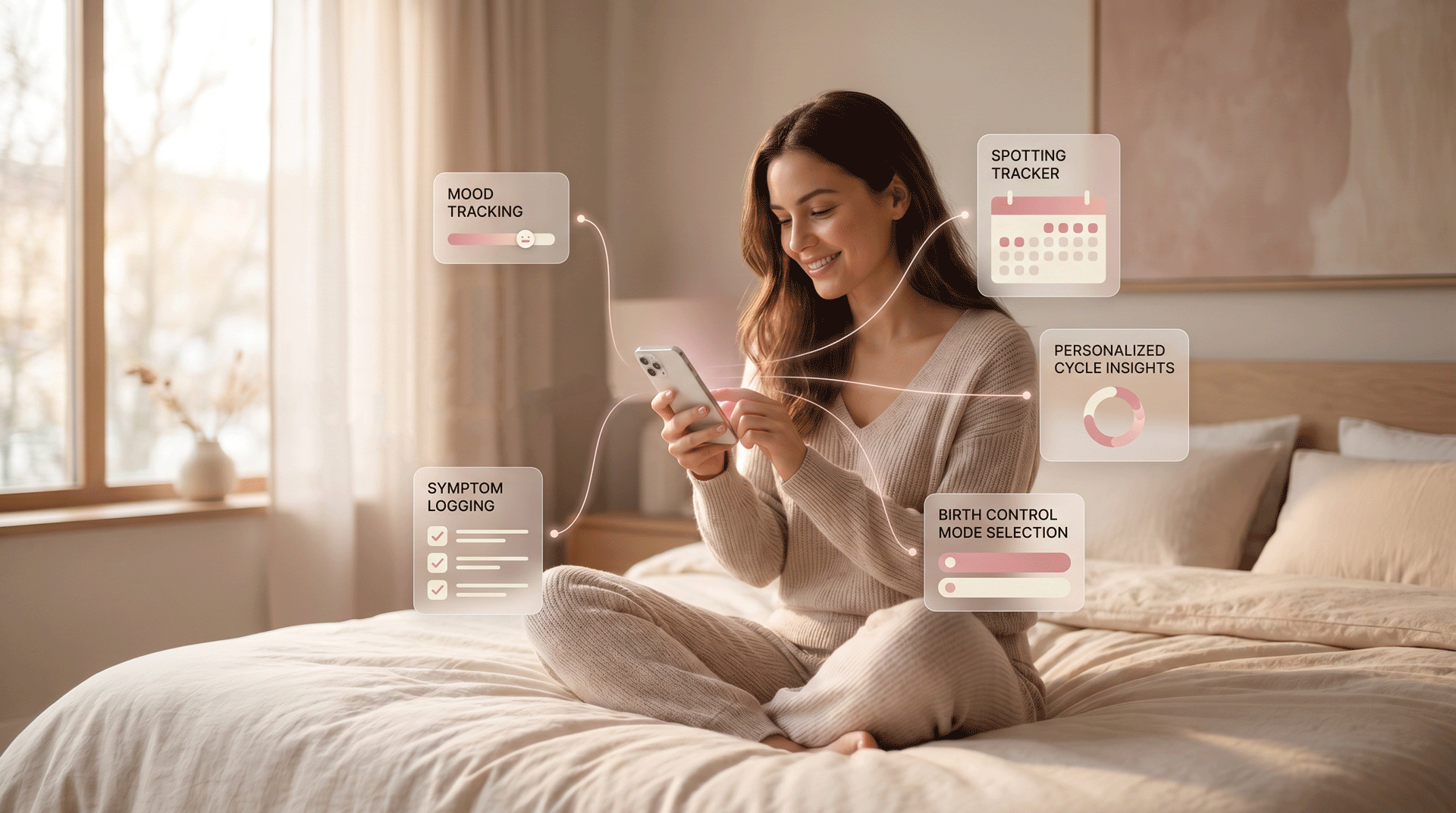
Your body is not the same every day of the month, and your hunger, energy, cravings, and mood are not random either. They follow a predictable pattern tied to your menstrual cycle. Once you understand what is happening hormonally in each phase, the way you feel around food starts to make a lot more sense.
Kaifit recognizes four key phases of your cycle and gives each one a name that reflects what your body actually needs during that time. Here is a simple breakdown of each phase, what is happening inside your body, and how your nutrition can support you through it.
Phase 1: Menstrual Phase — Recovery
What is happening:
This is the start of your cycle, day one of your period. Estrogen and progesterone are at their lowest, and your body is shedding the uterine lining. Energy levels tend to dip, and many women feel more tired, sensitive, or physically drained than usual.
What your body needs:
This is a recovery phase, both physically and emotionally. Your body benefits from foods that replenish what it is losing and support comfort without causing additional inflammation or bloating.
Foods that tend to help:
- Iron-rich foods like lean red meat, lentils, spinach, and beans to replace iron lost during menstruation.
- Anti-inflammatory foods like berries, leafy greens, salmon, and walnuts.
- Warm, comforting meals that feel nourishing rather than heavy.
- Staying well hydrated to ease bloating and fatigue.
What to expect around food:
Cravings for sweet or salty foods are common during this phase due to low hormone levels and prostaglandins (compounds that trigger cramps). This is not a lack of willpower; it is biology. Honoring gentle cravings while staying nourished is the goal here, not restriction.
Phase 2: Follicular Phase — Build
What is happening:
After your period ends, estrogen begins to rise as your body prepares to release an egg. Energy starts to climb, mood often improves, and many women feel more motivated, focused, and physically capable than at any other point in the month.
What your body needs:
This is a building phase. Rising estrogen supports muscle repair and growth, making it a great time to focus on protein and nutrient-dense meals that fuel an active, energized body.
Foods that tend to help:
- Lean proteins like chicken, fish, eggs, tofu, and Greek yogurt to support muscle and energy.
- Fresh vegetables and fruits that feel light and energizing.
- Whole grains and complex carbohydrates for sustained energy.
- Fermented foods like yogurt and kimchi to support gut health, which tends to be more resilient during this phase.
What to expect around food:
Appetite may feel more moderate and manageable during the follicular phase. Many women find it easier to make consistent, balanced food choices here because energy and mood are more stable. This is a good phase to try new meals, meal prep, or experiment with adding more variety to your diet.
Phase 3: Ovulation Phase — Peak Energy
What is happening:
Estrogen peaks, luteinizing hormone surges, and your body releases an egg. This is typically the highest energy point of your entire cycle. Many women feel their strongest, most confident, and most socially engaged during ovulation.
What your body needs:
Your metabolism and energy demands are high right now. Your body is working hard, and it needs fuel that supports peak performance and keeps inflammation in check.
Foods that tend to help:
- Antioxidant-rich foods like berries, tomatoes, bell peppers, and leafy greens to support the inflammatory response that naturally occurs during ovulation.
- Light, easily digestible meals that do not slow you down.
- Adequate protein to maintain muscle during high activity.
- Fiber-rich foods to support digestion, which can sometimes speed up around ovulation.
What to expect around food:
Appetite may feel naturally lower during peak energy days for some women, while others feel more hungry due to increased activity. Energy is high, so this is a great time to focus on meals that fuel performance: balanced plates with protein, complex carbs, healthy fats, and plenty of vegetables.
Phase 4: Luteal Phase — Fuel Up
What is happening:
After ovulation, progesterone rises to prepare the body for a potential pregnancy. If no pregnancy occurs, both estrogen and progesterone begin to fall toward the end of this phase, triggering PMS symptoms for many women. This phase includes what some call the “late luteal phase,” the days just before your period begins, when symptoms tend to peak.
What your body needs:
This is the most nutritionally demanding phase of the cycle. Your basal metabolic rate (the number of calories your body burns at rest) actually increases slightly during the luteal phase, meaning your body genuinely needs more fuel. Cravings, hunger, and emotional eating urges are strongest here, and they are hormonally driven, not a personal failing.
Foods that tend to help:
- Complex carbohydrates like oats, sweet potatoes, brown rice, and whole grain bread to stabilize blood sugar and support serotonin production (which dips as progesterone rises).
- Magnesium-rich foods like dark chocolate, nuts, seeds, and leafy greens to ease cramps, reduce bloating, and support mood.
- Calcium-rich foods like dairy, fortified plant milks, and broccoli, which have been linked to reduced PMS symptoms.
- Consistent meals throughout the day to prevent the blood sugar swings that intensify cravings and mood shifts.
What to expect around food:
Hunger is genuinely higher during the luteal phase, and cravings for carbs, sugar, and comfort foods are extremely common. Rather than fighting these signals, the goal is to work with them: eat enough, prioritize satisfying foods, and give yourself grace. Restricting too aggressively during this phase often backfires and leads to stronger cravings and overeating.
How Kaifit Fits Into Your Cycle
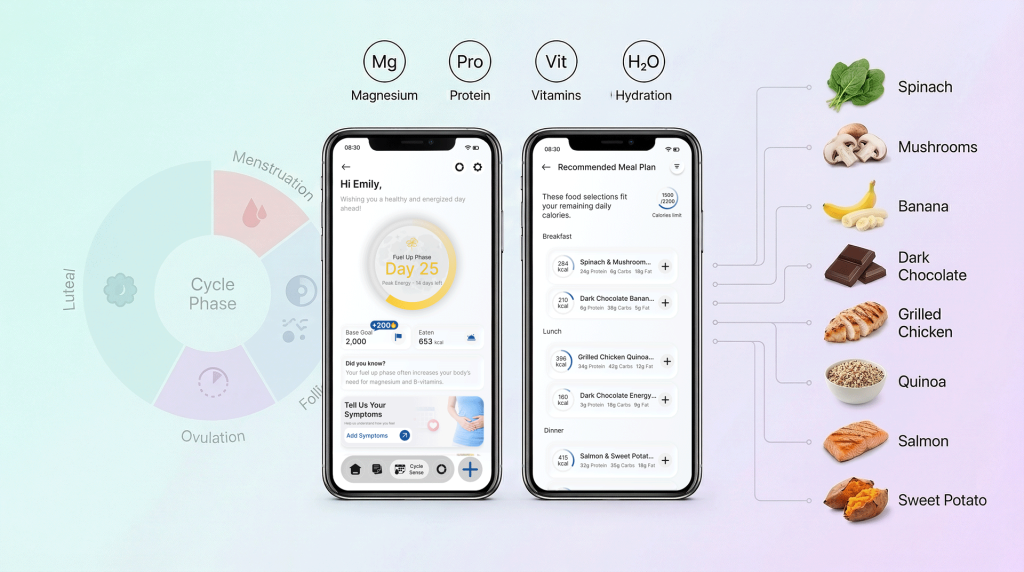
Kaifit recognizes these four phases and names them in a way that reflects what your body is actually doing:
| Cycle Phase | What We Call It in Kaifit |
|---|---|
| Menstrual | Recovery |
| Follicular | Build |
| Ovulation | Peak Energy |
| Luteal | Fuel Up |
These names are intentional. Recovery reminds you to rest and replenish. Build encourages you to fuel growth and activity. Peak Energy reflects your body’s natural high point. Fuel Up acknowledges that your body needs more support, not less, during the luteal phase.
As you track your nutrition in Kaifit, you can align your dietary preferences with your current phase and how you feel. This is not about following a strict phase-based diet; it is about having enough awareness to make food choices that support your body instead of working against it.
A Few Things Worth Remembering
Every woman’s cycle is different. Some experience strong phase-based shifts in hunger and energy; others notice subtler changes. These guidelines are a starting point for awareness, not a rigid prescription.
What matters most is tuning into your own body, noticing patterns over time, and using that information to eat in a way that genuinely supports how you feel across the month.
Your cycle is not an inconvenience. It is information. And the more you understand it, the better equipped you are to nourish yourself through every phase of it.
Frequently Asked Questions
Do I need to eat completely differently in each phase?
No. The core principles of good nutrition, adequate protein, balanced meals, plenty of vegetables, and staying hydrated, apply across all phases. Phase-based eating is about making small adjustments that support your body’s changing needs, not overhauling your entire diet every week.
Why do I crave carbs and sugar before my period?
During the luteal phase, serotonin levels dip as progesterone rises. Since carbohydrates support serotonin production, your body naturally craves them. Your metabolism also runs slightly higher, meaning you genuinely need a bit more fuel. These cravings are hormonal, not a lack of willpower.
Is it normal to feel hungrier during certain phases?
Yes. Hunger naturally increases during the luteal phase due to a slightly elevated metabolic rate and hormonal changes. Many women also notice lower appetite around ovulation. These fluctuations are normal and expected.
What is the most important nutrient during menstruation?
Iron is particularly important during menstruation because your body loses iron through blood. Eating iron-rich foods like lean meat, lentils, spinach, and beans during your period helps replenish those stores. Pairing iron-rich foods with vitamin C improves absorption.
Can tracking food in Kaifit help with PMS symptoms?
Tracking can help you notice which foods make PMS symptoms better or worse over time. For example, you might notice that eating more magnesium-rich foods reduces cramps, or that eating consistently throughout the day eases mood swings. Awareness is the first step toward making adjustments that actually help